
A bridge crane for bulk cargo is a highly efficient mechanical device specially designed for loading and unloading bulk materials. Its structural design is complex and refined, aiming to meet the demands for fast, safe, and efficient operation.


Its main structural components are as follows:
| Main Component | Function Description | |
|---|---|---|
| Gantry-type Metal Structure | Includes the main girder (beam), side legs, and luffing mechanism, forming the framework of the equipment. It typically features a large outreach and span to cover the operating range. | |
| Travel Mechanism | Drives the entire bridge crane to move longitudinally along tracks laid on the ground, enabling coverage of different cargo areas. | |
| Hoist Trolley | The trolley runs transversely on the main girder (beam) and is equipped with the hoisting mechanism. Usually of the wire rope traction type. | |
| Hoisting and Closing Mechanism | Controls the opening/closing and lifting/lowering of the grab or other spreaders, completing a series of actions such as grabbing, lifting, and discharging.
| Used to change the luffing angle of the main girder (or boom) to accommodate ship berthing, hold cleaning, or avoidance during non-operational states. |
| Intelligent Spreader | Depending on the material, can be equipped with hydraulic grabs or electromagnetic chucks. Some models support quick changeovers, enabling one machine to perform multiple functions. | |
| Electrical & Control System | Includes a fully digital AC variable frequency speed control system, PLC (Programmable Logic Controller), intelligent management system, video and voice system, and comprehensive safety protection systems. |
Weihua bridge cranes for bulk cargo are mainly used in fields demanding extremely high efficiency in loading and unloading large quantities of bulk materials, serving the global market:

LD electric single-girder overhead crane is a small-tonnage lifting equipment. It adopts a lightweight and modular design, featuring a simple structure, light deadweight, safety an…

The LH double-girder overhead crane is a heavy-duty lifting device that uses an electric hoist as its core hoisting mechanism. It integrates European FEM design standards with modu…

The New Chinese style double-girder overhead crane is a crane structure designed using serialized, standardized, and modular design theories, aided by modern computer-aided design,…
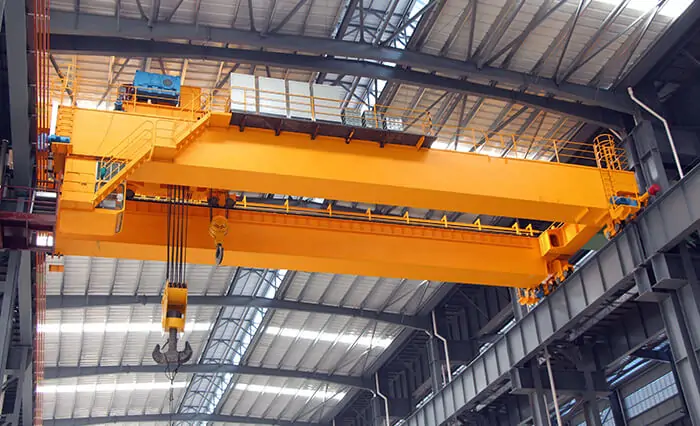
The QB explosion-proof hoist double-girder bridge crane is a lifting equipment specifically designed for flammable and explosive environments. Based on standard cranes, it incorpor…

Leveraging its industry-leading R&D strength and innovation capability, Weihua has developed a 2000t rail-mounted gantry crane tailored to meet complex project requirements. T…


